Hey, User !
Hey, User !
Welcome to SayaCare- India's only E-pharmacy that Tests every Batch👋FREE delivery on 1st order — Use coupon: TESTME101


Tested medicine >>> Patent medicine

Content Writer
Published on 4-7-2026
•7 min read
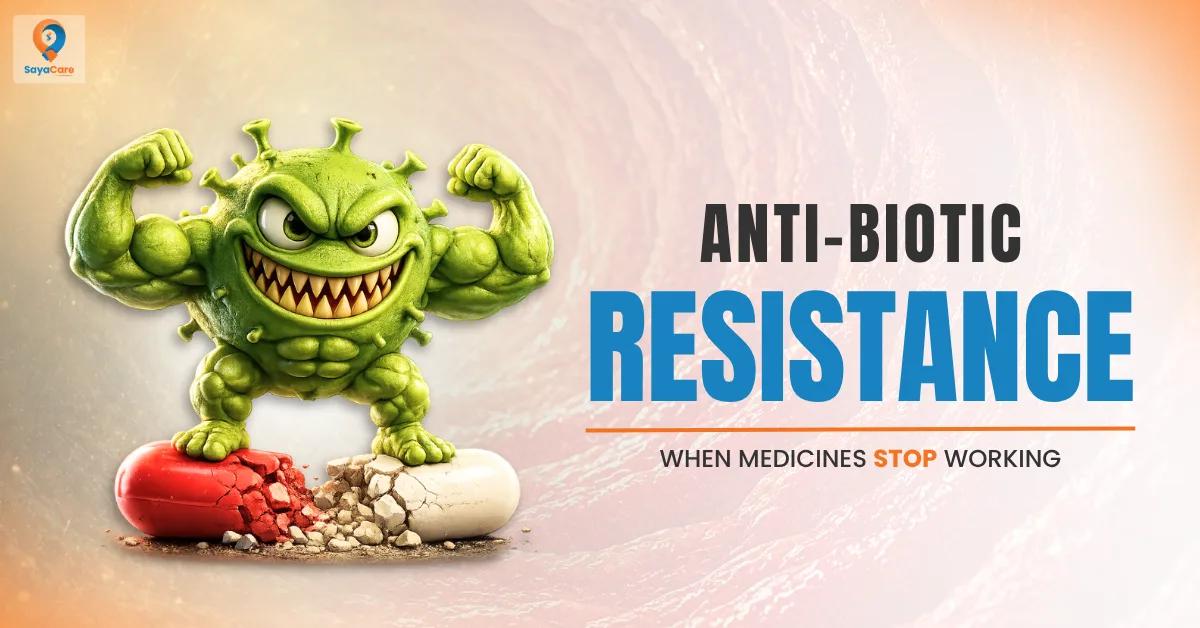
Table of Contents
There is a belief among Indians in regard to illness. Whatever the problem is, there’s one solution, pop a pill and this developed antibiotic resistance in us.
Cough? Take an antibiotics. Sore throat? Take an antibiotics. Loose motion? Take an antibiotics.
We have grown up watching this happen at our homes, in our neighbourhood, at every local pharmacy where no prescription is needed and no question is asked and if the pharmacy feels too far, someone at home always has a leftover strip, that works too.
But this habit has made us so reflexive that even for something as common as a cough or a cold, which most often is viral, we reach straight for an antibiotic. And antibiotics simply do not work on viruses.
This has quietly grown into something serious enough that Prime Minister Narendra Modi addressed it directly on Mann Ki Baat, urging Indians to stop taking antibiotics on their own and to use them only when prescribed by a doctor.
That one appeal from the highest office in the country says something about how widespread this problem has become.
If you want to understand what antibiotic resistance actually is, why doctors are increasingly worried about it, and what you can do about it, read this till the end.
Antibiotic resistance is basically when bacteria develop an armor against the antibiotic, making the medicine ineffective against the very bacteria it was meant to kill.
But that is not the only problem. Since antibiotics fight germs on behalf of our immunity, overusing them slowly strips that immunity away and leaves us weaker over time.
So how exactly does antibiotic resistance occur? That is the main question, and the answer takes us to the next part of this story…….
For years people have been taking antibiotics for literally anything. And bacteria, fungi and other microbes are far smarter. Over time they figured out exactly where an antibiotic hits and changed themselves through mutation (a permanent change in their DNA, to protect that very spot).
This mutated defense gets passed down to the next generation, making each new strain harder to kill than the last.
Now the question is whether taking antibiotics is the only cause of this resistance. The answer is yes, but the ways we consume antibiotics go far beyond popping a pill, and that is what takes us to the next part of this story.
The impact of antimicrobial resistance or antibiotic resistance is that it has killed nearly 2 lakh+ people in India in 2021. So, what is actually driving it:
Dr. Rajrupa recalled a patient who popped an antibiotic for a minor cold without consulting anyone. The fever didn’t go away. That is because when you take an antibiotic based on symptoms alone, the antibiotic has no way of knowing what it is fighting (bacteria, virus, fungi etc). So it goes after everything, including the good bacteria your body actually needs and makes itself resistant to antibiotics.
“In India, antibiotics are available over the counter at almost any pharmacy without a prescription, in countries like Russia, Canada and Germany, almost nothing except vitamins is available without one. That gap in regulation is a significant part of why this problem has grown so large here” – Dr. Rajrupa
Many people experiencing a cough or cold avoid going to a doctor fearing the cost. So they walk straight to the pharmacy and walk out with an antibiotic. No diagnosis, no prescription, no understanding of whether an antibiotic was even needed.
Dr. Rajrupa put it plainly that patients want immediate relief. A proper microbial culture test takes at least two to three days, and most people are not willing to wait that long. Dr. Shubhankar added an important perspective here. For lower income patients, this is not just about impatience. They cannot afford to miss a day’s wage because of their illness, they cannot afford to endure prolonged pain or miss meals. They need something to work fast, and that desperation pushes them toward antibiotics even when it is not the right call.
Antibiotics are heavily used in poultry farms to keep animals healthy in crowded conditions. On top of that, untreated water released by hospitals and pharmaceutical manufacturing units carries antibiotic residues directly into the environment. All of this contributes to resistance building up in ways most of us never think about. [1]
Research suggests that PM 2.5 air pollution may also play a role in antibiotic resistance. Fine particles in the air can carry resistant bacteria and resistance genes, increase the transfer of those genes between bacteria, and raise human exposure to resistance elements. The evidence points to a strong global association between air pollution and antibiotic resistance, though researchers are still working to establish definitive causation[2].
Substandard medicine delivers very little of the actual active ingredient or salt. Because the active ingredient if less, it fails to kill the bacterial with full force, and the bacteria that survives get just enough exposure to learn how to resist it. This is exactly how resistance builds up over time [3]. Nearly 28% of medicine in the Indian market is counterfeit, and the number tells you how big role substandard medicine plays in resistance crisis. That is also why SayaCare has taken up an initiative to test every batch of the medicine before its reaches to the customers.
Click here to read: Why SayaCare is the Best Online Pharmacy
How to Read Medicine Test Report
Dr. Rajrupa and Dr. Shubhankar shared how they approach this with their own patients. “I do give an option to my patient whether they want to take antibiotics or should I start with symptomatic treatment. If they choose antibiotics, I tell them the side effects and if they choose symptomatic treatment, then I tell them the pros and cons. If they go for antibiotics, it’s necessary to take microbial culture test”.
That balance of choice and information is exactly what is missing when someone walks straight to a pharmacy and picks up an antibiotic on their own. Here is what doctors want you to know:
Not every flu needs an antibiotic. In fact most of them don’t. Before reaching for one, the right step is to get a microbial culture test done to understand what you are actually dealing with. Skipping this step has consequences that go beyond one person. With no major new class of antibiotics developed in decades, every unnecessary use brings us closer to a future where these medicines stop working altogether for everyone.
Most people want to feel better immediately and in doing so they never give their immunity a real chance to do its job. Doctors suggest waiting at least three days before turning to antibiotics, and using this time to get your blood tests done. Let your body fight the infection on its own. Just like exercise makes your muscles stronger, fighting an infection makes your immunity stronger. Every battle your body wins on its own is a step toward a more resilient immune system.
Supporting your immunity with supplements like Vitamin C, Vitamin D, Zinc and Vitamin E can help your body respond faster and recover better. But the dosage matters and should always be discussed with a doctor before you start taking anything.
Antibiotic resistance is not someone else’s problem. Every unnecessary strip of antibiotics brings us closer to a future where these medicines stop working for everyone.
Next time you feel a cough or fever coming on, wait. See a doctor before you see a pharmacist. Let your body fight first.
Because the antibiotics that save lives in emergency rooms today need to still work tomorrow.
Table of Contents